How to Buy an Acoustic Piano
A practical guide to choosing an acoustic piano for your home, school, church, studio, or performance space
Buying an acoustic piano is a meaningful decision. For many people, it is part musical investment, part furniture decision, and part long-term addition to the home, school, church, studio, or institution where it will be played.
It can also feel surprisingly complex at first. First-time piano buyers often encounter unfamiliar brand names, wide price ranges, different sizes, new and used options, and plenty of opinions about what matters most.
This acoustic piano buying guide is designed to make the process easier. You don’t need to know everything about piano construction, tone, touch, or maintenance before you begin shopping. You simply need a practical starting point, a sense of what questions to ask, and enough guidance to begin choosing an acoustic piano with confidence.
From here, you can explore the topics that matter most to your piano search, including your goals, size, cost, new vs. used options, tone and touch, preparation, brands, and in-person comparison. You’ll also find answers to common questions we’re asked about how to buy an acoustic piano.
Define your goals before buying an acoustic piano
We frequently recommend that piano buyers start with a simpler question before comparing brands, sizes, finishes, or prices: Why am I buying an acoustic piano, and what do I hope it will help me achieve?
The answer can shape almost every part of the buying process. A piano for a beginning student, for example, may need to meet different goals than one for a serious player, teaching studio, church, school, or long-term family instrument. Some buyers are looking for a transition piano they may upgrade later. Others hope to find an acoustic piano they will enjoy for decades.
Thinking through that purpose early can make every other decision easier, from size and budget to quality level and long-term value.
Common mistakes first-time piano buyers make
First-time piano buyers don’t need to know everything before visiting a showroom, but it helps to avoid a few common mistakes:
- Focusing only on brand names
- Choosing a piano before thinking through how it will be used
- Assuming bigger is always better
- Overlooking piano preparation and service history
- Buying without comparing multiple instruments in person
Taking time to compare pianos side by side and talk through your goals can make the process feel much clearer.
Grand vs. upright piano: Which is right for you?
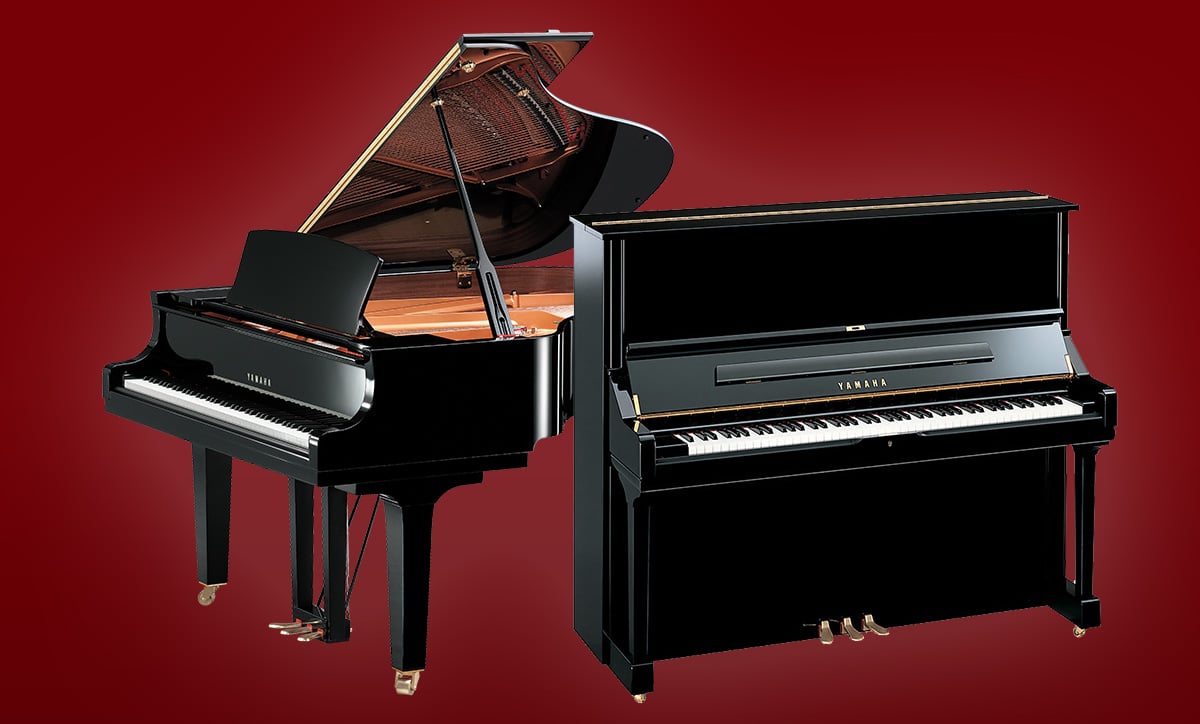
One of the first decisions many people make when shopping for an acoustic piano is whether to look for a grand piano or an upright piano.
For many acoustic piano buyers, a grand piano is the instrument they first imagine. But grand pianos are not the right fit for every home, space, or budget, and a well-made upright will often outperform a lesser-quality grand. The best choice depends on the quality of the individual piano, where it will be placed, how it will be used, and what feels right to the player.
Acoustic piano size guide
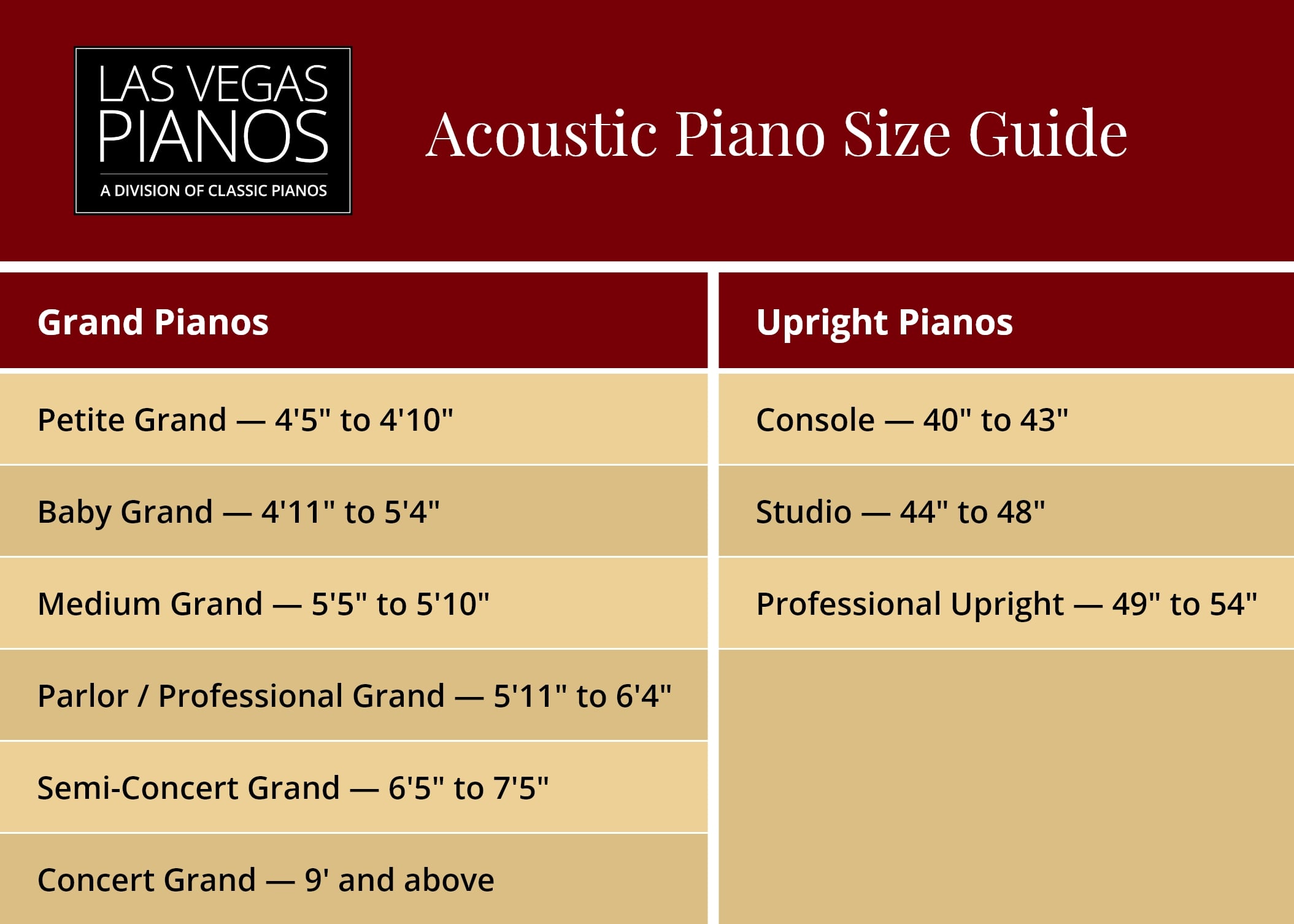
| Grand Pianos | Upright Pianos |
|---|---|
| Petite Grand, 4 feet 5 inches to 4 feet 10 inches | Console, 40 inches to 43 inches |
| Baby Grand, 4 feet 11 inches to 5 feet 4 inches | Studio, 44 inches to 48 inches |
| Medium Grand, 5 feet 5 inches to 5 feet 10 inches | Professional Upright, 49 inches to 54 inches |
| Parlor or Professional Grand, 5 feet 11 inches to 6 feet 4 inches | |
| Semi Concert Grand, 6 feet 5 inches to 7 feet 5 inches | |
| Concert Grand, 9 feet and above |
If you think a grand piano may be possible, ask your showroom team about using a paper floor pattern so you can visualize exactly how much space the instrument will occupy. Seeing the outline in your room can be much more helpful than relying on measurements alone.
In Las Vegas, many buyers are choosing pianos for older homes, family living rooms, teaching studios, and creative spaces where room layout, hardwood floors, stair access, and placement all matter. Comparing different sizes in person can make it easier to imagine what will work in your home.
Your decision should account for available space, budget, room layout, overall piano quality, and how the piano sounds and feels to the player.
How much does an acoustic piano cost?
If this is your first time buying an acoustic piano, or if you haven’t yet done much shopping, the wide price ranges might surprise you. Size matters, but so do brand, condition, craftsmanship, preparation, warranty coverage, delivery, and the services included with the purchase.
It’s helpful to begin with a general budget range, but try not to focus on price alone. Every buyer’s budget is different. Many buyers find that once they compare instruments in person, they begin to understand why one piano may cost more than another — and where the best long-term value may be. The goal is to find an acoustic piano that fits your comfort level while still supporting your musical goals.
As you think about budget, consider:
- How long you expect to own the piano
- How often it will be played
- Who will use it
- If you may want to upgrade later
- What services, preparation, delivery, and support are included
For a deeper look at new piano pricing, MSRP, retail selling price, and long-term value, see our guide to how much a new piano costs in 2026.
New vs. used acoustic pianos: Which is better?
One of the most common questions people ask when shopping for an acoustic piano is whether they should buy a new piano or a used piano.
The truth is that both can be excellent choices. The right answer depends on your goals, budget, preferences, and the quality of the piano itself.
Advantages of buying a new piano
A well-made new piano can be appealing for buyers who want long-term peace of mind. Depending on the instrument and dealer, buying a new piano may offer:
- A full manufacturer’s warranty
- A known history with no previous ownership concerns
- Current manufacturing standards and materials
- Greater consistency in condition and performance
- Many years of expected service life
Advantages of buying a used piano
A quality used piano can also offer strong value, especially when it has been carefully selected, inspected, and prepared. Depending on the instrument, buying a used piano may offer:
- A lower purchase cost
- Access to a higher-quality piano within the same budget
- Unique tonal characteristics that may develop with age
- A proven performance history
- A wider range of brands, models, sizes, or finishes
Used pianos can vary widely. Condition, maintenance history, original build quality, and preparation matter far more than age alone. Terms such as restored, rebuilt, and refurbished are used frequently in the piano industry, but they can mean different things from one piano to another.
A well-maintained piano from a respected manufacturer may continue performing beautifully for decades, while a poorly maintained piano can become costly to repair regardless of brand.
Rather than focusing only on whether the piano is new or used, consider whether the piano is well-made, well-maintained, properly prepared, and a good musical fit for the player.
How to evaluate acoustic piano tone and touch
Even beginning players can usually tell when one piano feels more enjoyable to play than another. The differences may be hard to describe at first, but comparing acoustic pianos side by side can help you begin to notice what you like.
A good acoustic piano should:
- Sound pleasing to your ear
- Feel responsive under your hands
- Have a consistent touch from bass to treble
- Allow for musical expression, from soft playing to fuller dynamics
- Never feel sluggish, uneven, or difficult to control
Tone and touch are personal, but they are not entirely subjective. A piano’s design, materials, preparation, condition, and overall quality all influence how it sounds and feels.
That is one reason the showroom experience matters. When you play several instruments in the same visit, you may start to hear differences in warmth, brightness, sustain, power, balance, and responsiveness more quickly than you expected.
What is piano preparation, and why does it matter?
Piano preparation is the work experienced technicians do to help a piano sound, feel, and perform its best before it is delivered. For many people shopping for an acoustic piano, understanding preparation can make it easier to compare instruments and recognize the value a reputable showroom adds before and after the sale.
Many buyers are surprised to learn how much preparation can influence the playing experience. A piano may be well designed and well built, but still need careful attention after shipping, storage, showroom placement, or previous ownership.
What does piano preparation include?
Depending on the instrument, piano preparation may include:
- Inspection
- Tuning
- Regulation
- Voicing
- Cleaning
- Setup
- Final adjustments before delivery
Preparation matters for both new and used pianos. New pianos often travel long distances before arriving at a showroom and may need professional adjustment after uncrating. Used pianos need careful evaluation of their condition, maintenance history, wear, and long-term serviceability.
This is one reason two pianos of the same brand and model can sound and feel surprisingly different. The instrument itself matters, but so does the care it receives before you play it.
How should you compare acoustic piano brands?
If you’re not sure which brands to consider, don’t worry. Brand reputation can be important, but it’s not everything. Some familiar brands are well known for good reason. Other exceptional instruments come from makers buyers may not know yet, including respected European makers such as Bösendorfer, Schimmel, and Estonia.
When comparing acoustic piano brands, it helps to consider:
- Current quality and craftsmanship
- How the piano has been prepared
- How it sounds and feels to the player
- Long-term serviceability
- Warranty and dealer support
- Fit for your goals, space, and budget
Brand history can also be complicated. Some once-familiar piano names have changed ownership, manufacturing standards, or production locations over time. A knowledgeable showroom team can help you understand both the brand and the individual instrument in front of you.
Why comparing pianos in person matters
One of the most valuable parts of buying an acoustic piano is the opportunity to compare instruments side by side.
Even when two pianos look similar on paper, they can sound and feel very different in person. A showroom visit gives you a chance to hear those differences, feel how each instrument responds, ask questions in real time, and begin narrowing your preferences with guidance from an experienced team.
A strong piano showroom can help you:
- Compare multiple grand and upright pianos in one visit
- Experience differences in tone, touch, size, and style
- Explore new and used acoustic piano options
- Understand preparation, warranty coverage, and trade-up opportunities
- Ask questions before making a long-term purchase decision
This is also where many buyers discover that the piano they expected to choose isn’t always the one they connect with most. Reading an acoustic piano buying guide is a helpful starting point, but playing several instruments in person often makes the decision clearer.
Acoustic piano buying checklist
If you’re wondering what to look for when buying an acoustic piano, use this checklist as a starting point:
A checklist can’t choose the right piano for you, but it can help you ask better questions and compare instruments more confidently when you visit a showroom.
Visit Las Vegas Pianos to compare acoustic pianos in person
Learning how to buy an acoustic piano doesn’t have to feel overwhelming. Once you understand the basics, it becomes easier to compare instruments, ask useful questions, and recognize the piano that fits your goals, space, budget, and musical life.
Reading an acoustic piano buying guide is a helpful starting point, but the process becomes much clearer when you can hear and feel different instruments for yourself.
If you’re in Nevada, we invite you to visit Classic Pianos at 6295 McLeod DR #20 in Las Vegas to compare grand and upright acoustic pianos in person. Our team is happy to answer questions, talk through options, and help you understand what makes one instrument different from another.
Questions before you visit? Contact us or call 702-452-2400.
Frequently asked questions about buying an acoustic piano
How much should I spend on an acoustic piano?
Every buyer’s budget is different. The best range depends on your goals, experience level, space, and how long you expect to own the instrument. It also helps to consider what is included with the purchase, such as preparation, delivery, warranty coverage, and follow-up service.
Is it better to buy a new or used piano?
Both can be excellent choices. A new piano may offer the peace of mind of a full warranty and known history, while a carefully selected used piano may offer strong value. The key is to evaluate the piano’s quality, condition, preparation, and long-term serviceability.
Should I buy a grand or upright piano?
The right choice depends on your space, budget, musical goals, and the quality of the individual instrument. Many buyers imagine a grand piano first, but a well-made upright can be an excellent choice for a home, studio, school, or church.
What should I look for when buying an acoustic piano?
Focus on how the piano sounds, how it feels, how it has been prepared, and whether it fits your goals, space, and budget. It is also helpful to compare warranty coverage, service support, trade-up opportunities, and the reputation of the showroom or dealer.
How long does an acoustic piano last?
A quality acoustic piano can last for decades when it is properly maintained. Construction quality, climate, placement, frequency of use, and regular service all play a role in how well the instrument performs over time.